- Persian Rugs History
Persian rug weaving traces its origins to ancient Persia (modern-day Iran) over 2,500 years ago. The earliest surviving Persian carpet, the Pazyryk rug discovered in Siberia and dating to 500 BCE, demonstrates that sophisticated weaving techniques were already well-established by that time.
Throughout the centuries, Persian rug making evolved through various dynasties, each contributing distinct artistic elements. The Safavid period (1501-1736) brought particular advancement as Shah Abbas established royal court workshops, bringing together the finest artists and weavers. This era produced the most exquisite city workshop rugs with complex curvilinear designs.
Simultaneously, tribal and village rug traditions developed in regions throughout Persia, each with distinctive patterns reflecting local cultural influences. Major weaving regions included Isfahan, Tabriz, Kashan, Kerman, Heriz, Sarouk, and Qom, among many others.
The Persian rug industry faced significant challenges in the 20th century, particularly after the 1979 Iranian Revolution and subsequent trade embargoes. Despite these obstacles, the traditional techniques and designs have persevered, with both antique pieces and contemporary rugs from Iran remaining highly prized for their exceptional quality and artistic merit.
- Persian Rugs Construction
Persian rugs feature hand-knotted construction using the asymmetrical (Persian/Senneh) knot, which creates the detailed, intricate patterns that define these masterpieces. Weavers tie individual knots around pairs of adjacent warp threads, with each knot forming a single point in the pattern. The foundation typically consists of cotton warp and weft threads, though older or tribal pieces may use wool for both. The pile is primarily wool from highland sheep, with silk sometimes incorporated in premium pieces for highlighting specific design elements.
Knot density, measured in KPSI (knots per square inch), ranges from 25-30 in tribal rugs to over 800 in the finest city workshop pieces. This dense construction creates both remarkable detail and exceptional durability. Selvages (side edges) feature tightly wrapped cords in colors complementary to the design, while fringes extend naturally from the warp threads rather than being sewn on afterward. This integrated construction creates a rug that can last for generations when properly maintained.
- Persian Rugs Care Instructions
Your Persian rug represents not only a significant investment but a piece of living history that can last generations with proper care. Follow these guidelines to preserve its beauty and integrity:
Regular Maintenance:
- Vacuum gently 1-2 times weekly using suction only (never use a beater bar)
- Always vacuum with the pile direction, not against it
- Rotate 180° every 6 months to ensure even wear and sun exposure
- Use appropriate rug padding to prevent slipping and reduce wear
Spill Response:
- Immediately blot (never rub) spills with clean white cloth or paper towel
- Work from the outside of the spill inward to prevent spreading
- For water-soluble spills, dampen a clean cloth with plain water and continue blotting
- Avoid commercial carpet cleaners, which can damage natural dyes
- Contact a professional for persistent or oil-based stains
Seasonal Care:
- During humid New Jersey summers, ensure good air circulation around the rug
- In winter, maintain 40-60% humidity to prevent fiber drying from heating systems
- Be vigilant for moths, especially in rarely used rooms or during summer months
- Consider professional cleaning every 2-3 years, more frequently in high-traffic areas
Professional Services:
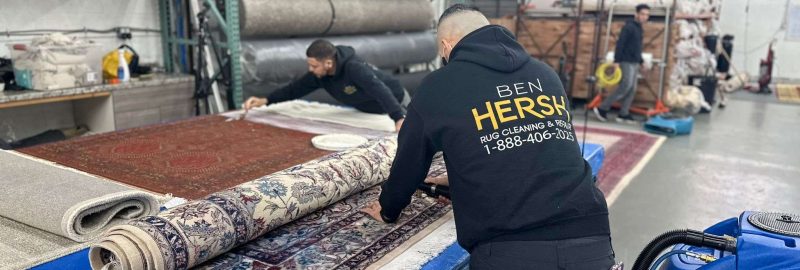
- Only trust specialists experienced with hand-knotted Persian rugs
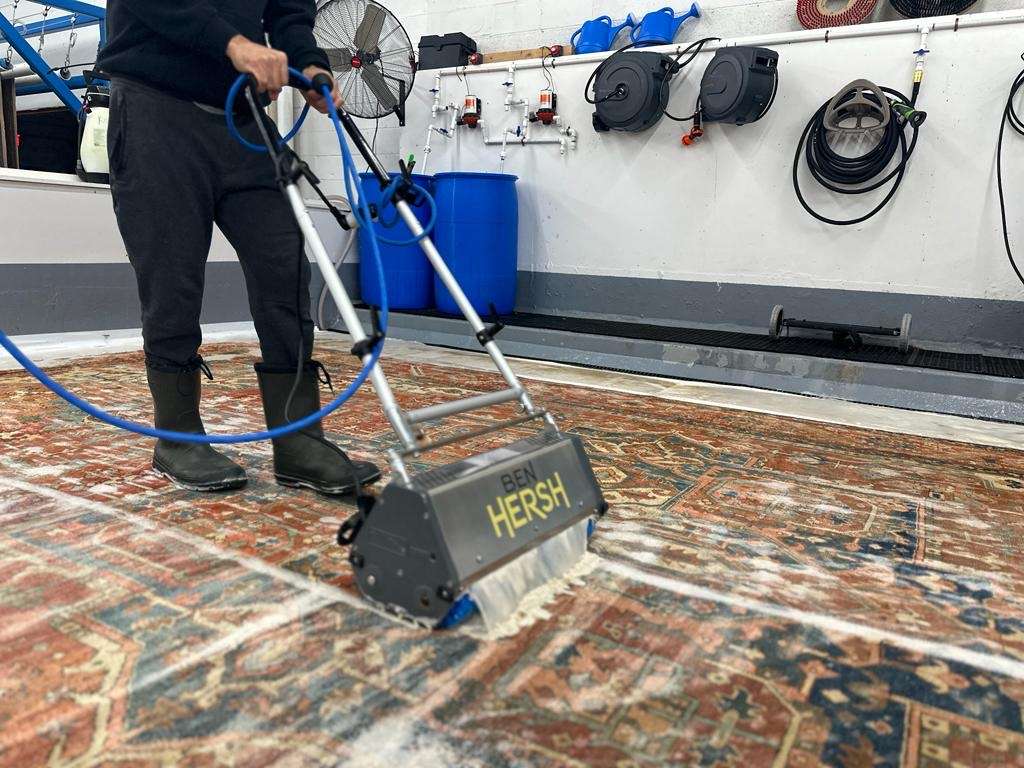
- Hand-washing is the only appropriate cleaning method
- Avoid dry cleaning, steam cleaning, or chemical treatments
- Immediately seek professional help after any water damage
- Have fringe professionally cleaned when it appears soiled
- Persian Rugs Common Issues
Persian rugs, despite their durability, can develop several common issues that require attention:
- Fringe damage – Often the first area to show wear; avoid vacuuming fringes directly and keep them clean to prevent brittleness
- Pile wear – High-traffic areas may show compressed or worn pile; rotation helps prevent localized wear patterns
- Moth damage – Particularly concerning in wool rugs stored in dark areas; look for bare patches, loose fibers, or tiny white cocoons
- Dye bleeding – Can occur with improper cleaning or water exposure; most common with red dyes that may transfer to lighter areas
- Foundation weakening – May cause rippling, buckling, or deformation; inspect the back of your rug periodically for structural issues
- Dry rot – Usually affects older rugs in humid environments like coastal New Jersey areas; characterized by brittleness in the foundation
- End selvage unraveling – The bound edges can wear with time and should be professionally repaired when damage first appears
- Color fading – Natural dyes are susceptible to UV damage; rotate rugs regularly and use window treatments to minimize exposure
- Pet damage – Claws can catch and pull knots, while urine can cause dye bleeding and foundation deterioration if not promptly treated
- Improper cleaning damage – Harsh chemicals, excessive moisture, or aggressive scrubbing can permanently damage these precious textiles
- Persian Rugs Benefits
Persian rugs enhance your home through superior insulation properties that help maintain comfortable room temperatures year-round, natural sound dampening qualities that create peaceful environments, remarkable durability that withstands generations of use, investment value that often appreciates over time, and timeless beauty that complements both traditional and contemporary New Jersey home designs.
- Persian Rugs Warnings
Exercise caution with Persian rugs in the following circumstances:
- Avoid placing Persian rugs in direct sunlight, especially in south-facing New Jersey rooms with large windows, as UV exposure can cause irreversible fading of natural dyes.
- Never use harsh chemicals, bleach, or store-bought carpet cleaners on Persian rugs as these can damage natural dyes and fibers, potentially causing color bleeding or fiber deterioration.
- Keep Persian rugs away from consistently damp environments such as bathrooms, laundry areas, or basement spaces, particularly in humid New Jersey coastal regions where mold and mildew can develop.
- Exercise extreme caution with antique Persian rugs in homes with untrained pets; claws can catch and pull knots, causing irreparable damage to the pile and structure.
- Avoid placing heavy furniture directly on Persian rugs without furniture cups to distribute weight and prevent permanent crushing or foundation damage.
- Never machine wash, dry clean, or steam clean Persian rugs; these methods can destroy the rug’s structure, colors, and value. Hand-washing by specialized professionals is the only appropriate cleaning method.
- Be cautious about storing Persian rugs in attics or basements where temperature and humidity fluctuations are common in the Mid-Atlantic climate; moths and pests may also be more prevalent in these areas.
- Persian Rugs Quick Facts
- Origin
- Age
- Material
- Room Suitability
- Acoustic Engineering
- Cleaning Frequency
Persian rugs represent the pinnacle of hand-knotted textile art, with a heritage spanning more than 2,500 years. These magnificent floor coverings aren’t merely decorative elements—they’re cultural treasures that tell stories through their intricate patterns and vibrant colors.
The Rich Heritage of Persian Rugs
The art of Persian rug weaving developed in ancient Persia (modern-day Iran), becoming not just a craft but a profound expression of cultural identity. Each region developed distinctive designs that reflected local artistic traditions, available materials, and cultural influences. The Safavid Dynasty (1501-1736) brought a golden age of Persian rug making, when royal workshops produced masterpieces that set standards still revered today.
These exquisite textiles gained prominence along the Silk Road, becoming treasured trade goods that spread Persian artistic influence throughout Asia and Europe. Today, whether gracing a Bergen County colonial home or a Philadelphia brownstone, Persian rugs connect New Jersey households to this rich cultural legacy.
Distinctive Features of Persian Rugs
What sets Persian rugs apart are their incredibly detailed patterns, achieved through high knot densities and masterful techniques passed down through generations. The asymmetrical Persian knot (Senneh knot) allows for more intricate curvilinear designs than rugs from other traditions.
Each Persian rug tells a story through its pattern. The central medallion often represents unity and balance, while garden (Chahar Bagh) designs symbolize paradise. The Tree of Life motif represents eternity and connection between earth and heaven. Even subtle color variations (abrash) reveal the rug’s authenticity, showcasing the natural dyes derived from plants, insects, and minerals.
Selecting the Perfect Persian Rug
When choosing a Persian rug, consider both its artistic merit and practical aspects:
Regional Styles: Each Persian weaving center creates distinctive styles. Isfahan rugs feature refined medallion designs with jewel tones, while Heriz rugs offer bold geometric patterns in rich reds and blues. Tabriz pieces showcase precise, intricate designs, and Qom rugs (often silk) present extremely fine details.
Sizing and Placement: In traditional Persian homes, rugs determined room dimensions rather than fitting existing spaces. For New Jersey homes, popular sizes include 8’x10′ and 9’x12′, which create balanced room compositions in both historic Princeton homes and modern Bergen County residences.
Color Harmony: Traditional Persian palettes include rich reds, blues, and creams that complement both historic homes along Philadelphia’s Main Line and contemporary spaces in North Jersey. The sophisticated color combinations have remained relevant through centuries of evolving interior design trends.
Investment Value: Beyond their beauty, quality Persian rugs often appreciate in value over time. Particularly sought-after are pre-1920s pieces and rugs from renowned workshops, which have demonstrated steady value growth even during economic fluctuations.
